
Practice Assessment
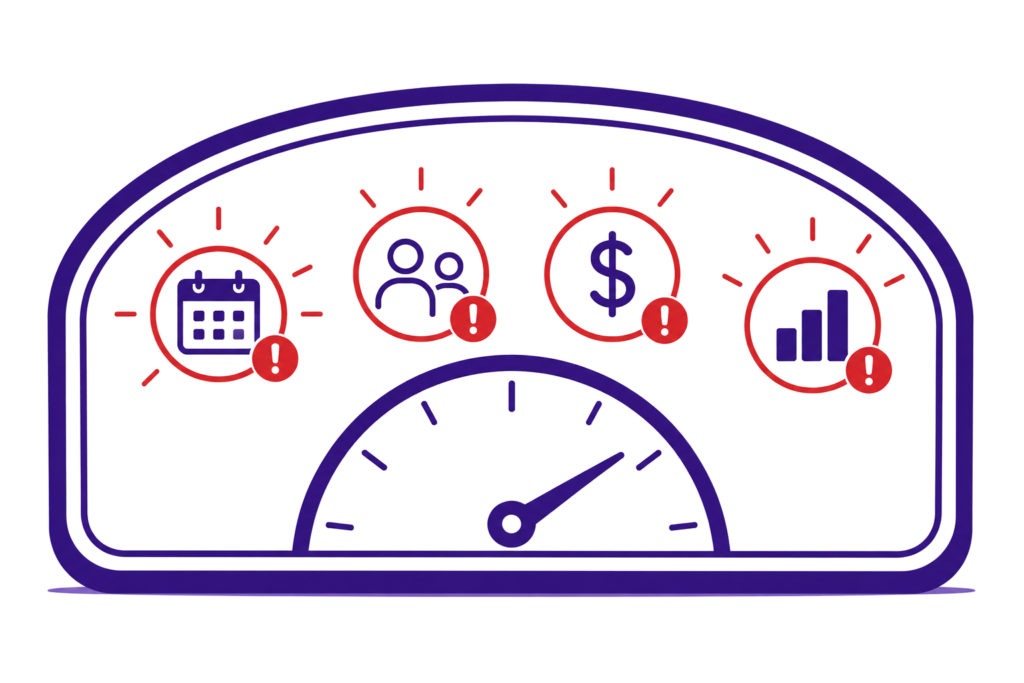
When You Know Something’s Wrong—but You Can’t Put Your Finger on It
You need more new patients.
Your schedule has too many holes.
Good staff are hard to find—and even harder to keep.
Therapist productivity isn’t where it should be. Team members are unhappy about pay. Reimbursement rates keep shrinking while every expense seems to be heading in the opposite direction.
Or maybe the practice has simply gotten bigger than you ever expected—and the way you managed it when it was small doesn’t work anymore.
You know there’s a problem.
The trouble is, you may not know whether you’re looking at the actual problem or just one of its symptoms.
That’s where our in-depth Practice Assessment comes in.
Who a Practice Assessment Is For
Our Practice Assessment is for pediatric private practice owners who are struggling with:
- Not enough new patients
- Difficulty managing a growing practice
- Trouble hiring or retaining good staff
- Low insurance reimbursement rates
- Too many cancellations and no-shows
- Therapist productivity concerns
- Staff complaints about compensation
- Revenue that isn’t producing enough profit
- A practice that feels harder to run than it should
You may have one of these problems.
You may have several of them piling up on top of each other.
Either way, continuing to guess is not only frustrating, it’s costly.
The Problem You See May Not Be the Problem You Have

Let’s say you need more new patients.
Is it really a marketing problem?
Maybe.
Or perhaps referral sources aren’t being followed up with.
Calls aren’t being handled properly.
Evaluations aren’t turning into ongoing visits.
Current patients are not completing their treatment plans.
Or your schedule already has more openings than you realize because cancellations aren’t being recovered.
The same thing happens with staff productivity.
Is there a problem with some of the team members? Are expectations unclear? Is scheduling getting in the way? Is management avoiding a conversation that should have happened three months ago?
Until you know what’s really causing the problem, you can throw a lot of time and energy into fixing the wrong thing.
We Look Way Beneath the Surface
The Practice Assessment gives you an experienced, objective look at what’s happening inside your practice.
We begin with the issues keeping you up at night.
Then we dig deeper.
We ask the questions that don’t always get asked.
We examine information in context rather than looking at one isolated number.
We listen for what isn’t being said.
And we connect dots that can be difficult to see when you’re the person standing in the middle of the practice every day.
There’s no generic checklist and no predetermined conclusion.
Your practice leads the evaluation.

You May Be Surprised by What We Find
Sometimes the owner’s instincts are exactly right.
Sometimes the problem turns out to be in a completely different part of the practice.
And sometimes one underlying issue is creating several problems at once.
That’s why we don’t want to tell you what we’re going to find before we’ve looked. We don’t know yet—and neither does anyone else who hasn’t taken the time to truly examine your practice.
That little bit of mystery is the whole point.
We’ll uncover what the heck is going on.
What You’ll Walk Away With
At the end of the Practice Assessment, you’ll have:
- A clearer understanding of what’s really happening
- Greater insight into the causes behind your biggest concerns
- Problems and opportunities you may not have seen on your own
- A better sense of what needs your attention first
- Recommendations based on your actual practice—not somebody else’s
You won’t walk away with a stack of generic advice and a pat on the head.
We’ll tell you what we found, why it matters and what we recommend doing next.
Get Started!
When your practice isn’t working the way you want it to, it’s easy to start pulling every lever you can think of.
Save yourself the aggravation and get a Practice Assessment instead.
You don’t have to have it all figured out before you call us. That’s the whole point.
Tell us what’s keeping you up at night, and we’ll start there.